
Fall officially arrives tomorrow, and retailers everywhere are making the seasonal switch. Summer merchandise is moving out, fall products are moving in, and displays are getting a refresh.
But before you decide what gets the prime shelf space this season, there’s one place worth looking first: your own sales data.
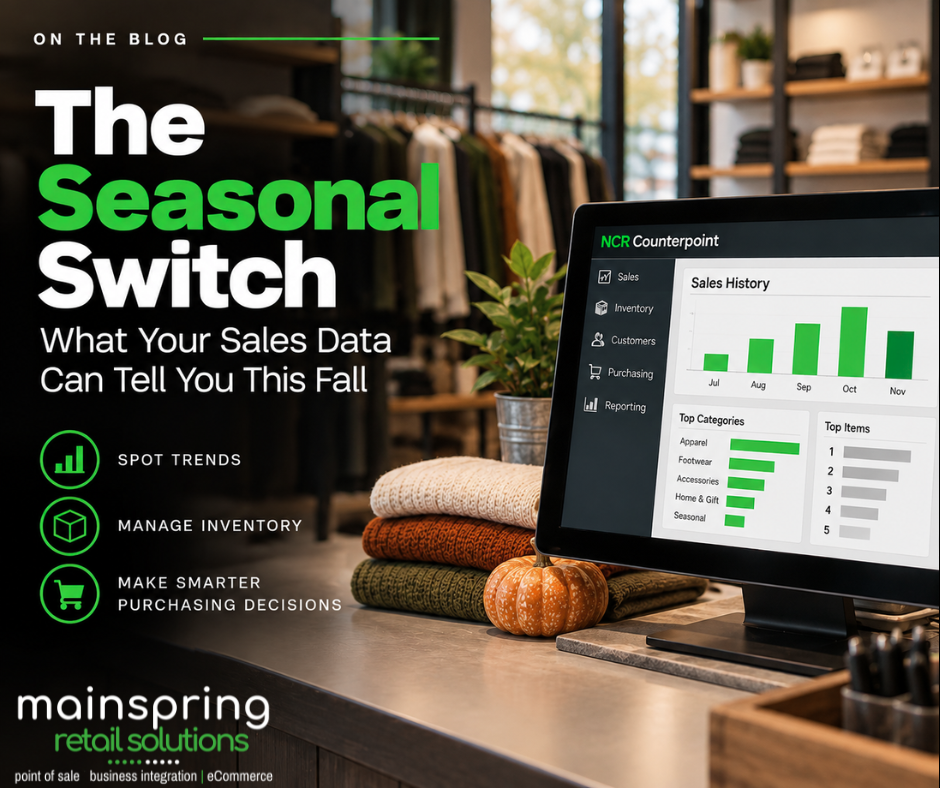
Your retail system has been collecting information all year, and if you’re using NCR Counterpoint, that history can tell you a lot about what your customers buy, when they buy it, and where to spend your inventory dollars.
Look Back Before You Buy Forward
It’s easy to rely on instinct when placing seasonal orders, especially when you know your customers well. But last year’s sales can add some valuable context.
Take a look at what happened during the same period last year. Which items sold quickly? Which categories performed better than expected? And, just as importantly, what was still sitting on the shelf when the season ended?
Historical sales data can help you make more informed purchasing decisions instead of simply repeating last year’s orders.
Look Beyond Total Sales
Overall sales numbers are important, but they don’t always tell the whole story.
Digging into sales by department, category, vendor or individual item can show you where your business is actually growing, and where customer demand may be changing.
A strong season overall can sometimes hide an underperforming category. On the other hand, a smaller category may be quietly gaining momentum and deserve more attention this year.
Find Your Seasonal Sweet Spot
Timing matters with seasonal merchandise.
Looking at when items began selling last year, and when those sales started slowing down, can help you better understand your actual selling window.
Did customers start buying fall merchandise earlier than expected? Did demand peak quickly? Were markdowns needed because inventory arrived too late or there was simply too much of it?
Those patterns can help you make better decisions about when to bring merchandise in, how much to stock and when it may be time to start moving remaining inventory out.
Pay Attention to What Didn’t Sell
Your best sellers aren’t the only items worth reviewing.
Slow-moving and aging inventory can tell you just as much about your business. If you still have merchandise hanging around from last fall, take a closer look before placing similar orders again.
Maybe the quantity was too high. Maybe the price wasn’t right. Or maybe your customers simply weren’t interested.
Whatever the reason, identifying those items now can help prevent another season of tying up money, and shelf space, in inventory that isn’t moving.
Let Your Customers Tell the Story
Your sales history isn’t just about products. It’s also about your customers.
Purchase history can help reveal repeat shoppers, buying patterns and opportunities to reconnect with customers based on what they’ve purchased before.
Instead of sending the same promotion to everyone, retailers can use customer data to create more relevant communication and better-targeted campaigns throughout the season.
You Already Have the Data. Put It to Work.
One of the biggest advantages of a retail management system like NCR Counterpoint is the amount of information it collects as part of your everyday business.
The key is knowing where to find it, and what to do with it once you have it.
As you make the seasonal switch this fall, take some time to look back before you move forward. A few reports from last year could help you make smarter purchasing decisions, manage inventory more effectively and better understand what your customers actually want.
And if you know the information is somewhere in Counterpoint but aren’t quite sure which report to run, Mainspring Retail Solutions can help.
Sometimes the best tool for planning what’s next is already sitting right in front of you.